
We are unpacking content from Bali Business Review on YouTube to present a focused briefing on Bali’s mounting waste challenge. The report highlights rapid accumulation of plastic and organic waste, overloaded disposal sites in key regencies, and visible coastal contamination that is increasingly correlated with seasonal tourism peaks and operational gaps in municipal collection.
Hi, I’m Jason, a Business Journalist at Bukit Vista, and I’ll be unpacking analysis from Bali Business Review. Today, we’ll dive into Bali’s urgent waste problem to offer clear, data-driven insights.
Scale and Geography of Bali’s Waste Challenge
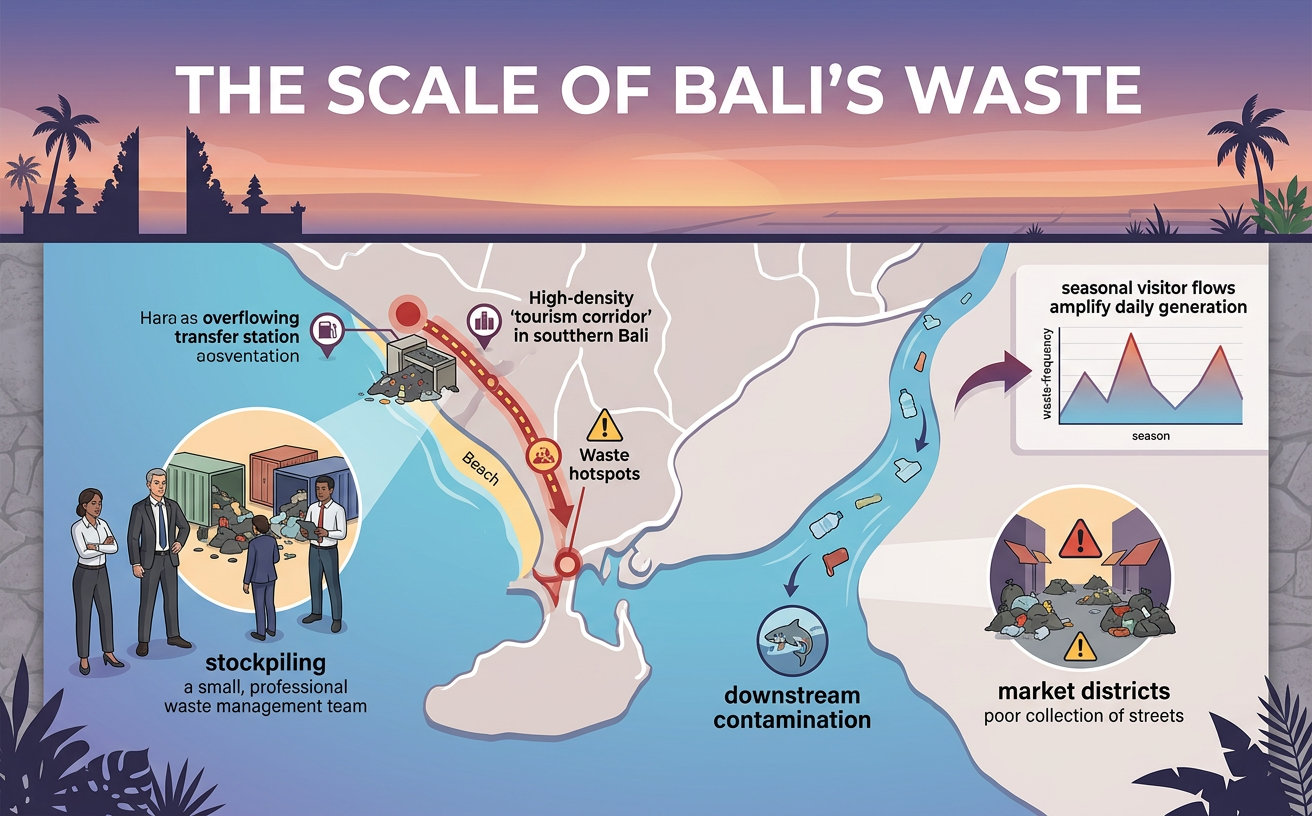
Bali’s waste problem is spatially concentrated around high-density tourism corridors, with beaches, market districts, and certain urban centers showing the most severe accumulation. The report emphasizes that seasonal visitor flows amplify daily waste generation, creating spikes that local collection infrastructure struggles to absorb. Overflowing transfer stations and informal dumping sites have been documented in multiple regencies, producing both visible coastal litter and inland environmental pressure.
Key geographic details
- Hotspots: coastal tourist beaches and nearby market areas where collection frequency is insufficient.
- Transfer station overload: peak-season volumes exceed processing capacity, forcing temporary stockpiling.
- Downstream contamination: river and coastal transport of plastics affects marine life and beach quality.
Primary Drivers: Consumption, Infrastructure Gaps, and Seasonal Flux
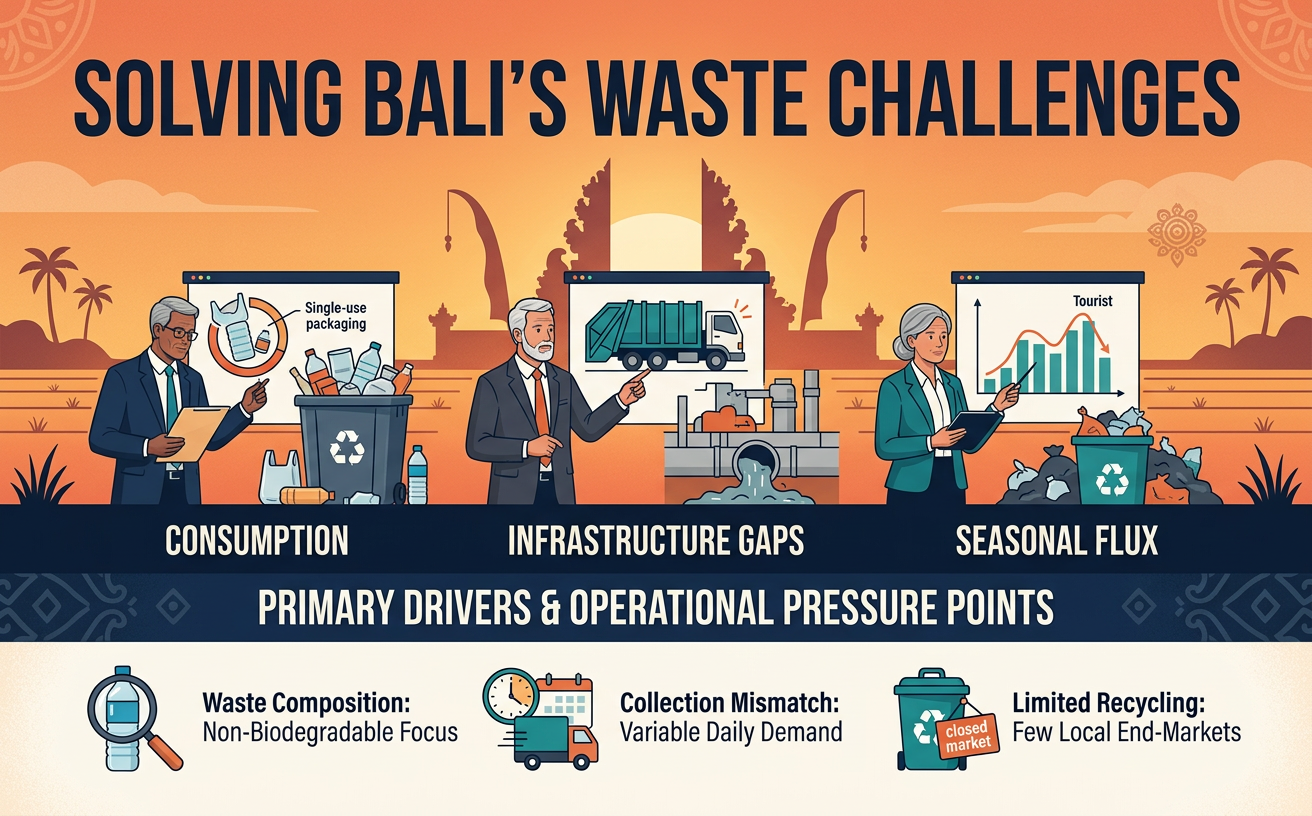
The analysis attributes the crisis to a combination of high single-use packaging consumption, inconsistent municipal collection, and infrastructure that wasn’t designed for peak-season throughput. Local waste management systems often operate on fixed schedules and fixed capacity, which makes scaling difficult during tourism surges. Additionally, informal dumping and limited recycling avenues compound the problem by creating secondary contamination points outside formal collection networks.
Operational pressure points
- Waste composition: a high share of non-biodegradable packaging among tourist-generated waste.
- Collection mismatch: scheduled pickups fail to match variable daily generation rates.
- Limited recycling options: few local end-markets for sorted plastics and residuals.
Direct Impacts on Tourism and Property Performance
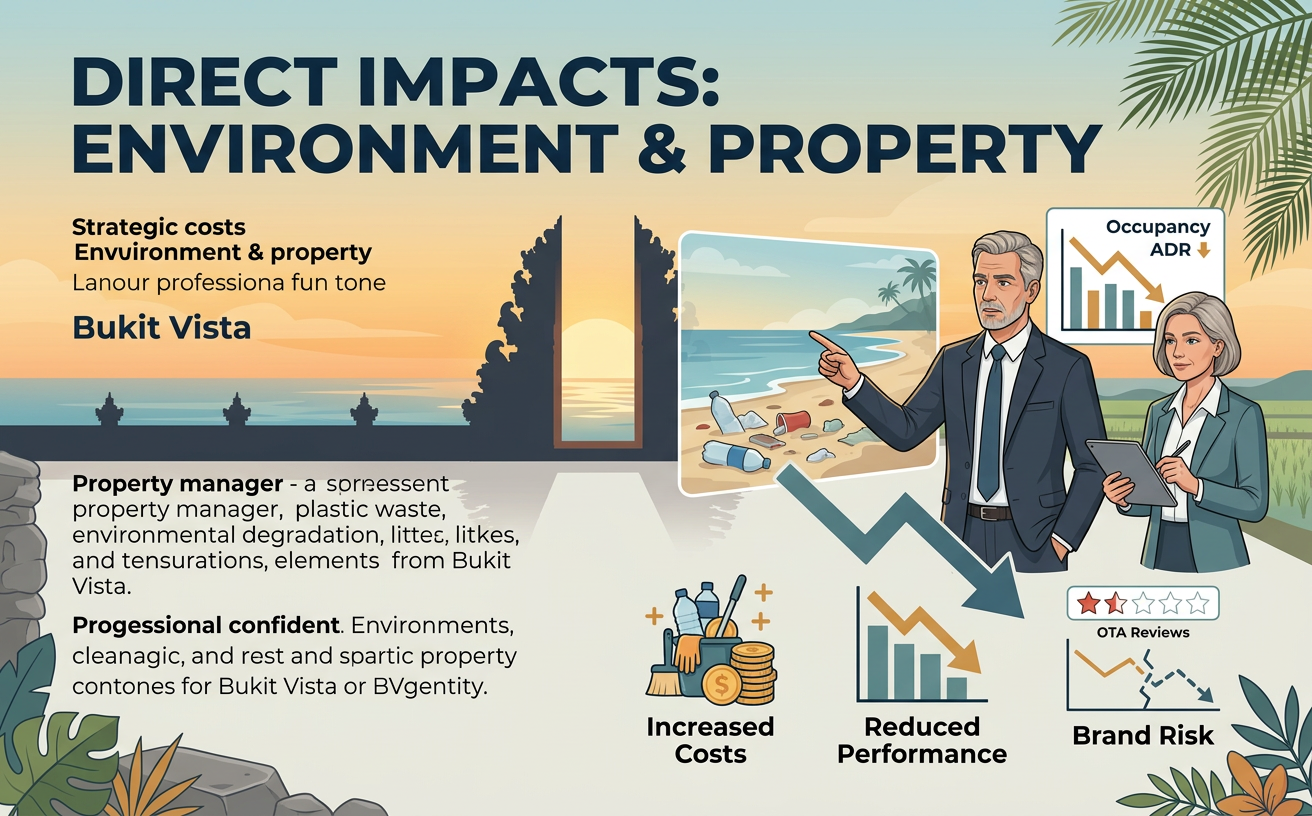
Visible waste on beaches and in public areas erodes visitor experience, influencing short-term reviews and longer-term destination perception. For property owners and managers, this can translate into lower occupancy, reduced nightly rates during affected periods, and an uptick in guest complaints that increase operational costs. Market sentiment is sensitive: even localized litter issues can depress demand for nearby villas and hotels, particularly among repeat and high-value guests seeking boutique or premium stays.
Property-specific considerations
- Guest experience risk: increased maintenance and cleaning costs to preserve property standards.
- Revenue pressure: potential for lower ADR (average daily rate) and occupancy if locality is perceived as degraded.
- Brand impact: negative guest feedback propagates through OTA reviews and social channels.
Government Response and Policy Measures
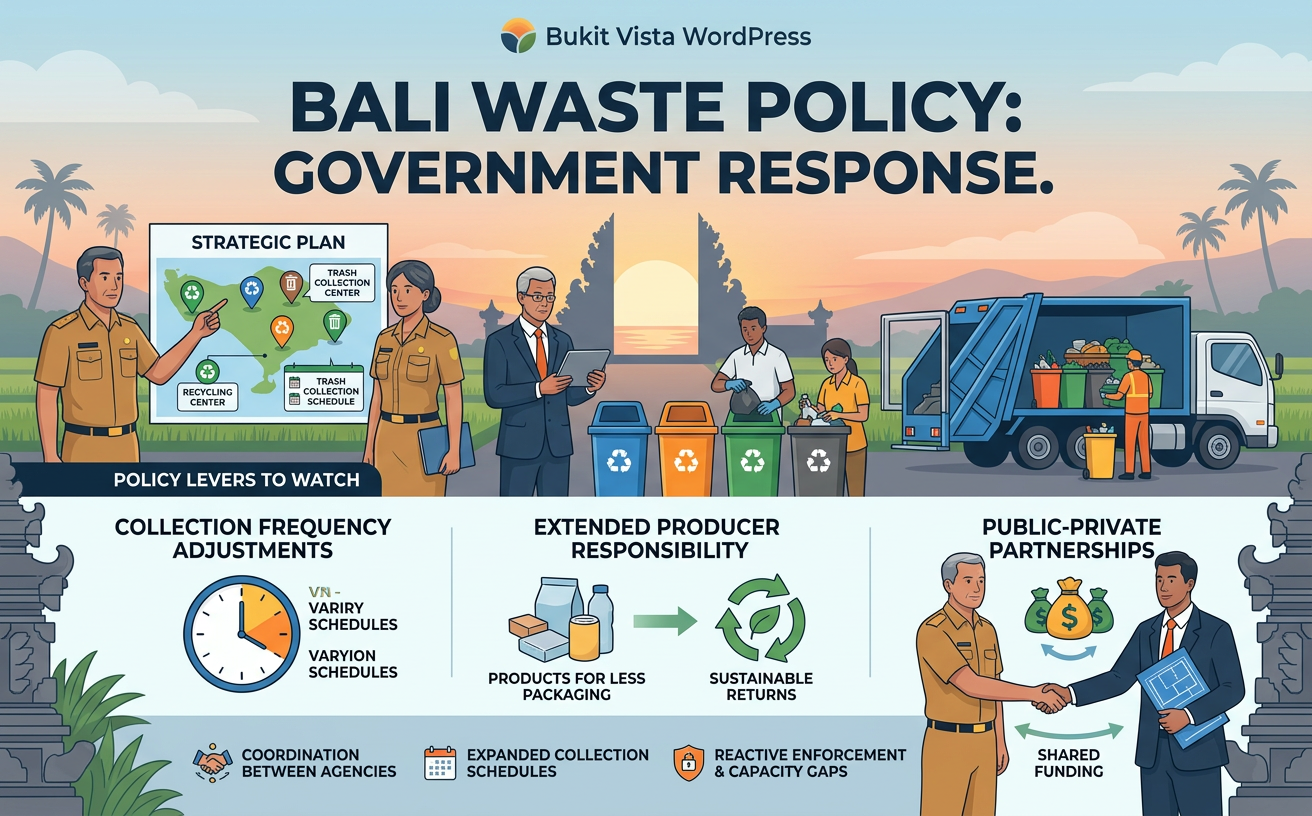
Authorities and local governments are cited as taking steps that range from stricter enforcement of dumping rules to piloting expanded collection schedules and investment in transfer infrastructure. However, the analysis notes implementation gaps: planned budgets, timelines, and local capacity vary significantly across regencies. Effective policy will require coordination between municipal services, tourism stakeholders, and private waste processors to align incentives and logistics.
Policy levers to watch
- Collection frequency adjustments: aligning pickups with tourism-season forecasts.
- Extended producer responsibility: potential regulation targeting single-use packaging inputs.
- Public-private partnerships: scaling transfer stations, sorting, and recycling initiatives through blended funding.
Business and Community Solutions: Risks and Opportunities
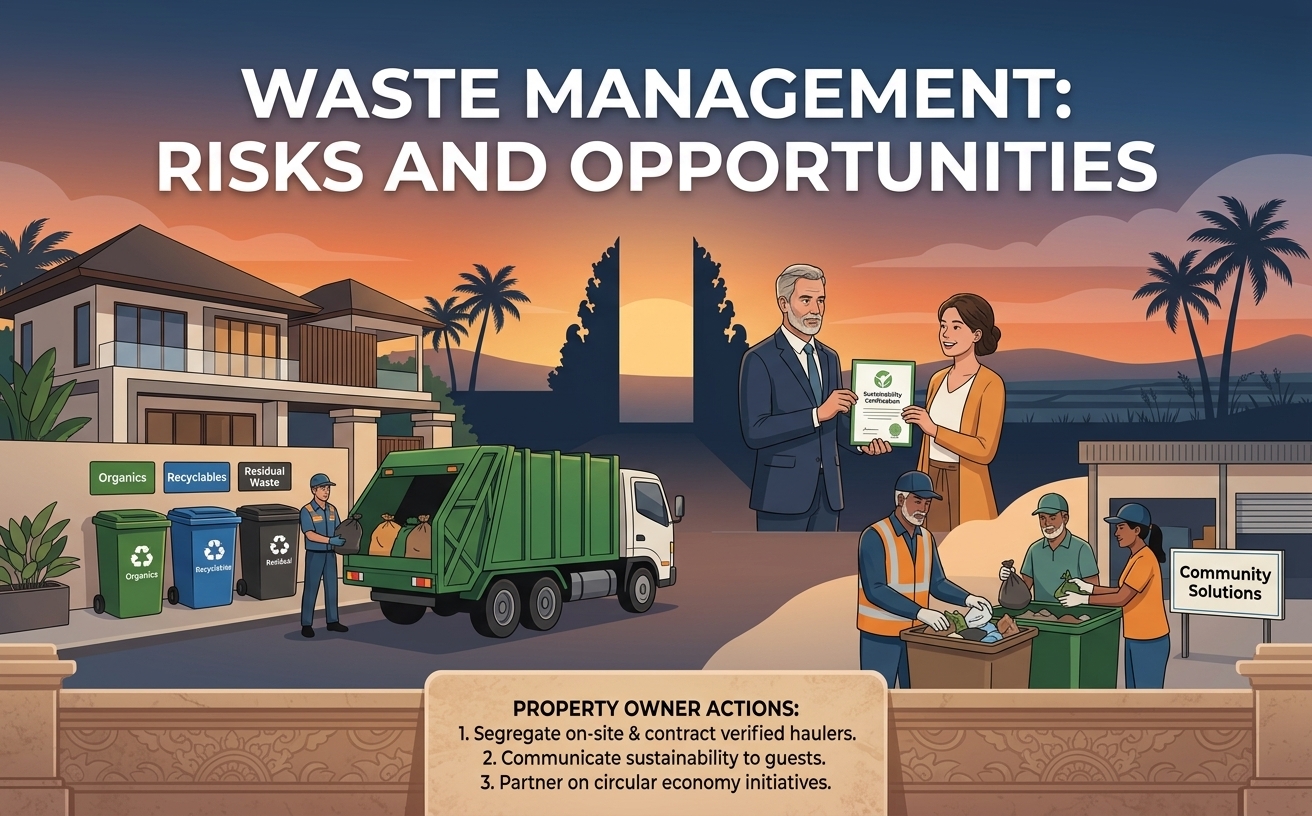
While the crisis poses clear risks to tourism-dependent revenues, it also surfaces near-term opportunities for property managers, waste service providers, and community groups to differentiate. Villas and hotels can adopt proactive waste reduction, on-site segregation, and partnerships with certified waste handlers to protect guest experience and brand reputation. Local enterprises that provide scalable collection, sorting, or circular-economy services will find demand from both the private sector and municipal contracts.
Action checklist for property owners
- Implement on-site waste segregation and contract verified haulage services.
- Communicate sustainability practices in listings to reduce brand risk and attract eco-conscious guests.
- Explore collaborations with local recycling or composting initiatives to reduce disposal costs and improve credentials.
Key Takeaways
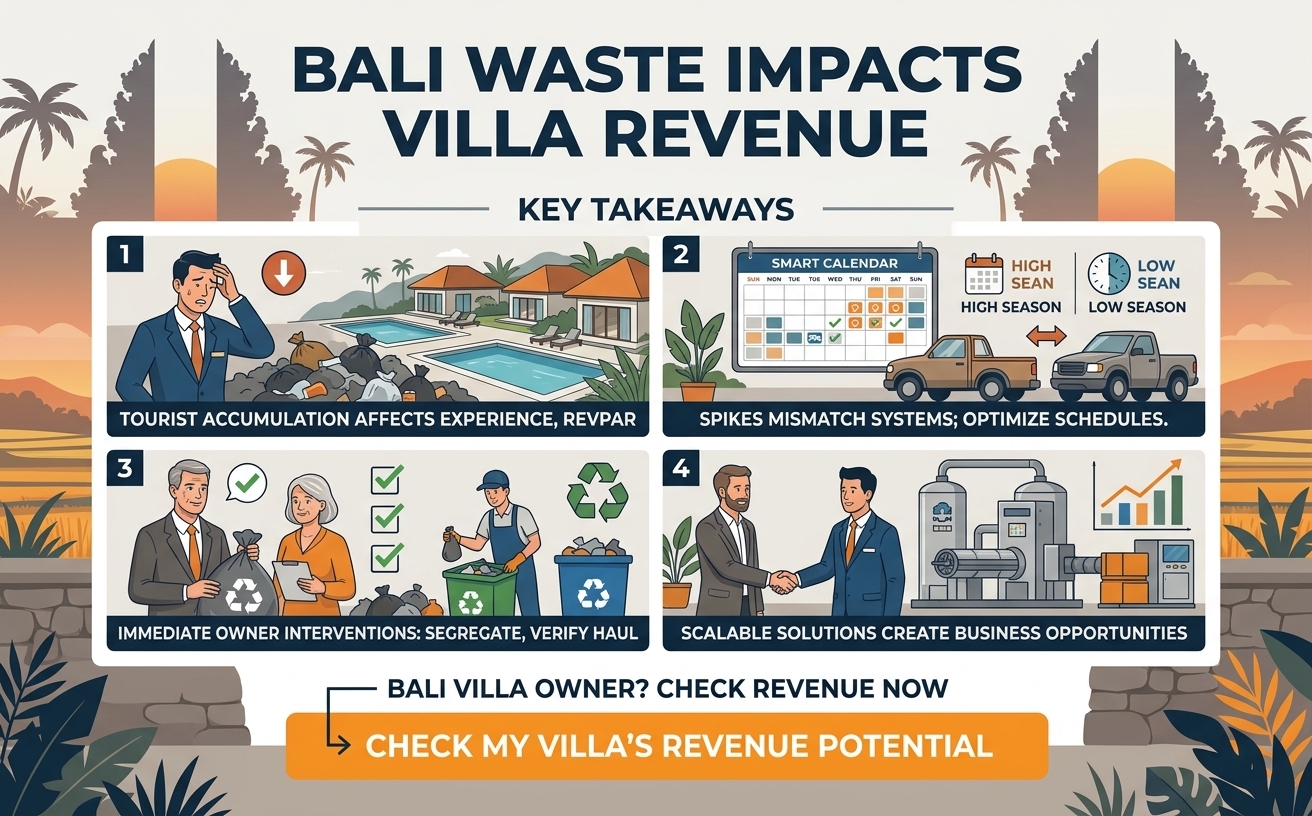
- Visible waste accumulation in tourism hotspots directly affects guest experience and can reduce occupancy and rates for nearby properties.
- Seasonal tourism spikes create mismatches with fixed collection systems; aligning schedules to demand is a priority.
- Property-level interventions (segregation, verified hauling, communication) are immediate, cost-effective mitigations for owners and managers.
- There is a business opportunity for service providers offering scalable sorting, recycling, and transfer-capacity solutions.
Final word: Bali’s waste challenge is both an environmental and commercial issue—addressing it will protect the destination’s long-term appeal and preserve property revenues. Property owners should act now with practical waste-management upgrades and public-facing sustainability measures to shield occupancy and rates. For any owner assessing financial exposure or upside from improvements, use the Free Bali Property Revenue Calculator to model how operational and reputation changes could affect earnings: https://www.bukitvista.com/bali-villa-management?utm_source=youtube&utm_medium=revcalc&utm_campaign=bbr.
Jason, Business Journalist at Bukit Vista
You’re a property owner? Wondering What Could Your Bali Villa Really Earn?
Get a data-driven revenue projection based on your property type, area, and bedroom count. Discover your villa’s true earning potential in Bali.